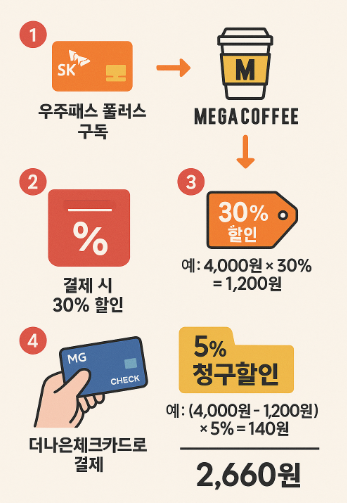
SK우주패스플러스 구독과 MG새마을금고 더나은체크카드(더나은체크카드) 할인은 중복 적용이 가능하며, 이를 통해 메가커피등 제휴처에서 최대 약 50%의 실질 할인을 받을 수 있습니다.
SK우주패스플러스 구독의 할인율은 30% (상시)할인& 할인 한도는 1일 1회 최대 9,000원, 월 최대 30,000원입니다. 적용 방식은 SKT T멤버십 또는 별도 우주패스 플러스(월 4,900원) 구독후, 메가커피 앱(메가오더)로 결제시 자동 적용됩니다. 전 메뉴 30% 할인 적용되며, 한 달 누적 최대 10만원 결제까지 할인이 가능하다고 합니다. MG새마을금고 더나은체크카드 할인율은 커피전문점 20% 환급할인입니다. 적용 조건은 결제 건당 최소 5,000원이상이며 월최대 6,000원까지(누적결제 3만원까지) 할인된다고 합니다.(전월30만원이상 실적필요)
SK우주패스 플러스 구독으로 30% 할인 적용(메가오더 결제 시) 남은 결제금액을 MG새마을금고 더나은체크카드로 결제하여 20%의 추가 환급할인을 받습니다.
예시) 아메리카노 1잔(2,000원) + 마르게리타 피자 1개(5,400원) = 총 7,400원 결제 시 우주패스 플러스 30% 할인 적용: 7,400원 → 5,180원 더나은체크카드 20% 환급 할인: 5,180원 → 4,144원(실 결제) 주문금액 합계 7,400원에 할인을 중복으로 적용하면 약 50% 할인된 4,144원에 이용할 수 있습니다.(환급추가할인포함)
주의사항 중복할인 적용을 위해서는 우주패스플러스 할인 후 결제금액이 5,000원 이상이어야 하므로, 최소 주문금액은 약 7,150원 이상이 필요합니다. MG새마을더나은체크카드의 월할인한도(3만원)와 우주패스플러스의 월할인한도(10만원)내에서만 중복할인이 가능합니다.메가커피 앱(메가오더)에서는 우주패스플러스 할인만 적용되며, 더나은체크카드 할인은 현장결제시 적용됩니다.
오늘은 관광객들의 한국의 필수쇼핑 코스이자 *올리브영(CJ Olive Young)에대해 알아보겠습니다. 특히, 인천공항, 명동 등에서 동등한 것이 좋은 모바일 특징과 추천 제품, 할인 정보는 물론, CJ 상품권 을 활용하여 훨씬 더 즐겁게 쇼핑하는 꿀 팁까지 아낌없이 알려드립니다.
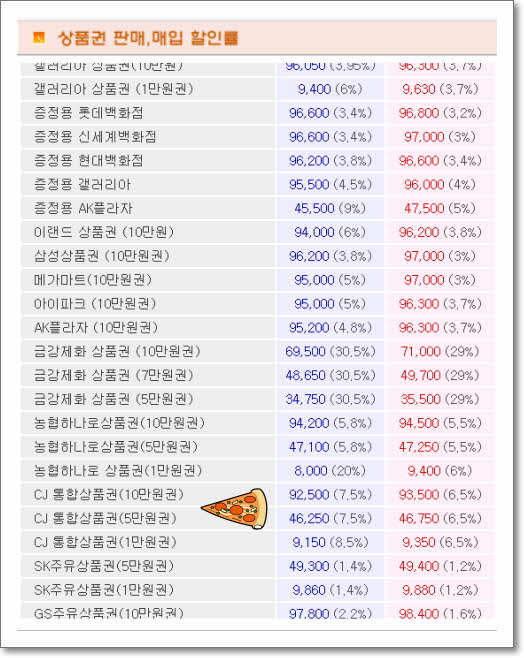
CJ 모바일 상품권 구매 방법(현재 할인율 7.5%, 잔액 60%까지 현금으로 받을 수 있음)
CJ 모바일 상품권은 주로 다음과 같은 경로를 통해 할인된 가격으로 구입이 가능합니다. G마켓, 옥션, 11번가, 티몬, 위메프, 쿠팡 등 대형 오픈마켓등 관련 사이트에서 CJ 모바일 상품권 할인 프로모션을 진행합니다. 보통 5%~10% 정도 할인된 가격으로 판매되며, 특정 카드 할인이나 추가 쿠폰을 적용하면 더 많이 구매할 수 있습니다. 카카오톡 선물하기, 네이버 쇼핑 등에서는 기프트콘 형태로 판매되는 경우가 많으며, 기념일에는 할인율이 높아집니다.
명동중앙점 서울 중구 명동길 21 (명동역 8번 출구에서 도보 약 분)특징명동역에서 가장 가까운 곳 중 하나로, 비교적 작은 크기이지만, 핵심 인기 제품을 빠르게 구매할 수 있도록 구성되어 있습니다. 추천제품으로는 가장 인기 있는 스킨케어, 메이크업 제품이며 다른 디스플레이나를 스킵하고 급하게 쇼핑해야 할 때 필요한 핵심 제품 위주로 구성되어 있습니다.
CJ 상품권 구매시 유의사항 추가할인 정보
모바일 상품권은 유효 기간이 있으며, 구매하기 전에 반드시 확인하고 유효한 기간 내에 보관하세요. CJ 모바일 상품권은 올리브영 온,오프라인에서 모두 사용할 수 있습니다.오프라인 매장에서는 결제시 직원에게 CJ 모바일 상품권을 사용한다고 말합니다. 휴대폰에 모바일 상품권이 있거나 번호가 있습니다. (보통 파일을 검색하여 사용합니다.) 잔액이 남아 있으면 계속해서 사용할 수 있습니다. CJ일부 상품권은 일정 금액 이상 구매 시에만 사용 가능한 경우가 있습니다. 잔액 환불 규정은 보통 상품권 금액의 60% 이상 사용 시 잔액을 현금으로 환불받을 수 있습니다. (1만원 이하 상품권은 80% 이상) '증정용' 상품권은 잔액환불이 불가능한 경우도 있으니 확인이 필요합니다.
CJ OLIVE YOUNG 할인 정보
올영세일 (올리브영 정기세일)DMS 3, 6, 9, 12월에 진행되는 행사로, 최대 70%까지 할인된 가격으로 제품을 구매할 수 있습니다. 오늘의 특별한 선착순 할인은 매일, 또는 특정 시간에만 진행되는 파격 할인 프로모션으로 CJ OLIVEYOUNG APP알리미를 통해 알림을 설정할 수 있습니다. CJ ONE APP 설치 앱 후 회원 가입 시 다양한 할인쿠폰 증정, 포인트 및 사용, 생일 쿠폰 등의 사용이 가능하며신용카드사와 제휴로 추가 할인을 받을 수 있는 경우가 있습니다. 택스리펀 (세금 환급)은 구매 시 즉시 환급 또는 경우 환급을 포함하여 환급을 받을 수 있습니다. (여권 지참 필수)
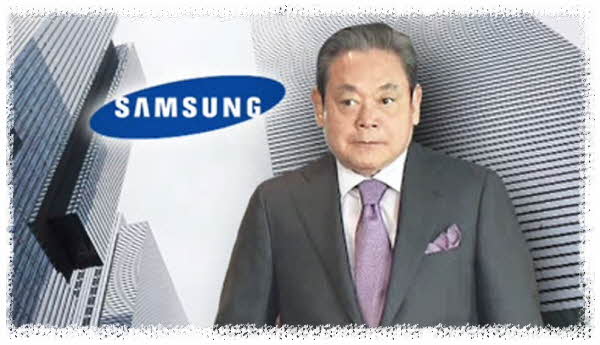
Chairman Lee Kun-hee, who grew Korea Samsung into a world-class company and passed away, is remembered as an icon of leadership and innovation that is ahead of his time. His quotes are deeply inspiring and insightful to not only managers but also everyone, and reminded them of the value of change, challenge, and growth.
1. “Change everything except your wife and children”
“At the end of the day, I must change. If you want to change, make a thorough change. I’m not kidding. You must change everything except your wife and children.” These words, which were coined in the 1993 New York Declaration in Frankfurt, symbolize Chairman Lee Kun-hee’s commitment to fundamentally reform the constitution of Samsung. It is a strong message that without change, there will be no survival or growth.
2. “Line up next to the rich. You have to go to the wild ginseng field to dig wild ginseng.”
This is a practical but insightful advice to be close to the rich if you want to be rich. It emphasizes the importance of networks and the environment, meaning that good opportunities and success are easier to come by successful people.
3. “Don’t just eat the rice cake that came in. If you don’t have it, go out and make it.”
This is a request for an active attitude to create opportunities for yourself and not to settle for what has been given in the past. It reminds us of the importance of creativity and the spirit of challenge.
4. “Don’t envy the rich. Let him learn to live.”
It means that the person should not just envy the results, but also learn the process, habits, and ways of thinking to reach success. It shows the pragmatic thinking of Chairman Lee Kun-hee that penetrates the essence.
5. “Don’t think about it. Losses bring profits.”
The advice is not to stick to short-term gains and losses, but to invest and manage with a long-term perspective. Sometimes, it means that the courage to take a loss leads to greater success.
6. “Experts can leave Samsung”
“If professionals who left Samsung start their own businesses or go to other companies and help the whole country, you don’t have to think about Samsung alone.” It symbolizes the open leadership of Chairman Lee Kun-hee, who values the cycle of talent and the development of the whole society.
7. “If you have a strong personality, you need to keep your spirits up”
In the era of diversity and creativity, it is a message that companies develop only when individuality is not suppressed, but rather saved. It contains the philosophy of respecting talent and creative management.
8. “If you do one thing a thousand times, you become a doctor”
It emphasizes the value of effort by saying that constant repetition and immersion eventually create professionalism. It reminds us of the importance of growth through constant improvement and self-improvement, not just repetition.
9. “You can’t win by doing the same as your competitor. Change will survive.”
It is a cold management philosophy that you cannot survive competition without differentiation and innovation. It emphasizes the need for courage and creative thinking that is different from others.
10. “If you’re complacent now, the future is up to others”
This means that you can lead the future only by constantly challenging and changing, not settling for the current success. It is a quote that reiterates the importance of change and innovation.
11. “Crisis is an opportunity”
It means not to be afraid of a crisis, but rather to use it as a springboard for new growth. It contains positive thinking about finding opportunities in difficulties.
12. “Quality is the life”
It is a management philosophy that puts the quality of products and services first. This quality management played a big role behind Samsung’s global success.
13. “Samsung is a second-rate, third-rate team. It should be a first-rate team.”
It emphasized the spirit of challenge that we should always move toward higher goals and not stay satisfied with ourselves. It shows the will of constant self-innovation.
14. “Customer complaints are the best ideas”
It means that new innovations and ideas emerge from customer dissatisfaction and discomfort. It reminds us of the importance of customer-centered management.
15. “Do what others don’t”
It contains the spirit of challenge to pioneer a new path that others have not tried, not everyone’s path. It symbolizes Samsung’s innovative DNA.
16. “Don’t be afraid of failure. Go for it”
This means that if you are afraid of failure, you cannot achieve anything. It shows the positive mindset of Chairman Lee Kun-hee that he grows through challenges and failures.
17. “Technology doesn’t work overnight”
Realistic advice that technological innovation and development require a long time and effort. Emphasize the importance of constant research and investment.
18. “If you don’t have talent, there’s no future”
This is a quote that contains Chairman Lee Kun-hee’s talent management philosophy that a company’s competitiveness comes from talent. It emphasizes the importance of securing and fostering talent.
19. “If you don’t change from the top, you don’t change from the bottom”
The message is that the entire organization can change only when the leader changes first. The beginning of change reminds you of the leader himself.
20. “Samsung’s future is in your hands”
It is a word that instills a sense of responsibility and ownership in both Samsung employees and the people. It emphasizes the role and importance of each member of the organization.
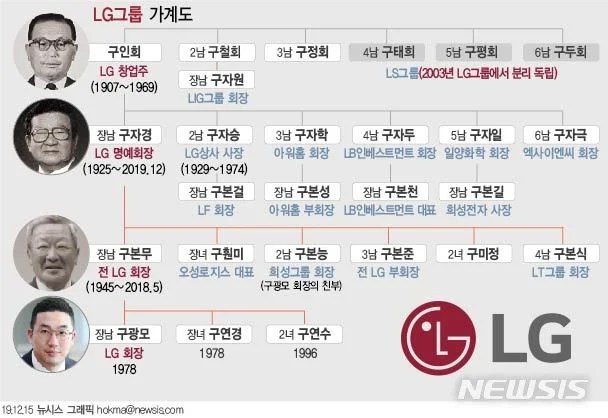
LG그룹은 1947년 창업 이래 4대에 걸쳐 장자(長子) 승계 원칙을 엄격히 지켜온 대표적 재벌가입니다. 창업주 구인회 회장 이후, 장남이 가업과 경영권을 승계하는 유교적 전통이 이어져 왔고, 계열 분리 시에도 잡음 없이 ‘아름다운 분할’로 평가받아 왔습니다. 여성이나 사위가 경영권을 승계한 사례는 없었고, 경영권과 관련된 지분은 장자에게 집중적으로 상속하는 것이 불문율이었습니다. 그러나 구본무 회장 별세 후 상속 과정에서 가족 간 소송이 본격화되며 그전통이 흔들리고 있습니다. LG복지재단 대표인 딸 구연경 등 친인척과 사위 윤관을 둘러싼 각종 의혹, 그리고 경영권 참여 의사까지 드러나면서 LG가의 미래에도 적지 않은 파장이 예상됩니다.
계열 분리의 역사
LG는 내부 갈등을 피하기 위해 계열 분리를 적극적으로 활용했습니다. GS그룹, LS그룹, LIG그룹, LX그룹 등은 모두 LG에서 계열 분리된 사례로, 경영권 분쟁 없이 원만히 독립해 나갔습니다. 이런 전통 덕분에 LG는 75년간 상속 분쟁이 없는 ‘화합의 명가’로 불렸습니다.
최근 상속 및 경영권 분쟁의 배경
구광모 회장 승계 과정
구본무 선대회장은 1994년 아들을 사고로 잃은 뒤, 장자승계 원칙을 지키기 위해 동생 구본능 회장의 장남 구광모를 2004년 양자로 입적시켰습니다. 구광모 회장은 2018년 구본무 회장 별세 후 그룹 총수로 선출되며, ㈜LG 지분 11.28% 중 8.76%를 상속받아 최대주주가 됐습니다.
최초의 상속 분쟁
2023년, 구본무 회장의 부인 김영식 여사와 두 딸(구연경 LG복지재단 대표, 구연수 씨)이 구광모 회장을 상대로 상속회복청구 소송을 제기하며 그룹 역사상 첫 상속 분쟁이 발생했습니다. 이들은 상속 당시 유언장이 있는 줄 알았으나, 뒤늦게 유언장이 없음을 알게 되어 법정상속분에 따라 재분배해야 한다고 주장합니다.
상속 분쟁, 소송의 쟁점
유언장 존재 및 분할 협의의 적법성: 세 모녀는 분할 협의가 기망(속임수)으로 이뤄졌다고 주장, 구광모 회장 측은 적법한 합의였으며 제척기간(3년)이 이미 지났다고 반박합니다. 녹취록 등에서 세모녀가 경영권 참여 의도를 드러낸 점도 논란이 되고 있습니다. 구광모 회장이 대부분의 유산을 상속받는 대신 가족 전체의 상속세를 부담하기로 했으나, 실제로는 각자 부담했다는 점도 갈등의 요인입니다.
딸 구연경 등 소송과 사위 윤관 관련 이슈
구연경 LG복지재단 대표는 상속 소송 비용 마련을 위해 이태원 자택을 매각하는 등 적극적으로 소송을 이어가고 있습니다. 세 모녀는 경영권과 관련된 지분 분할을 재협상하길 원하며, 법정 다툼이 장기화되고 있습니다. 구연경 대표의 남편 윤관(블루런벤처스 대표)은 최근 국적 위조, 탈세, 미공개 정보 이용 등 각종 의혹에 휩싸였습니다. 구체적으로 살펴보면 2016~2020년 배당소득 221억 원에 대한 종합소득세 123억원 부과를 두고 소송을 진행 중입니다. 윤관은 미국 국적과 비거주자 신분을 내세워 세금 납부 의무가 없다고 주장합니다. LG복지재단 대표인 구연경의 남편인 윤관이 투자·M&A 전문가인 점, 상속 분할 이의 제기 자리에 동석했던 점 등에서 세 모녀의 소송 배후가 아닌냐는 의문도 증폭되고 있습니다.
LG그룹 상속 분쟁의 파장과 가문의 전통적 승계 원칙의 균열
이번 소송은 LG가의 장자승계 원칙과 가족 간 화합이라는 전통에 처음으로 균열이 생긴 사건입니다. 만약 법원이 세 모녀의 손을 들어줄 경우, 구광모 회장의 ㈜LG 지분율은 9.7%로 줄고, 세 모녀의 합산 지분은 14.09%로 늘어나 경영권에 실질적 영향을 미칠 수 있습니다.
재산관리의 대리인 , LG재무팀의 입장
LG그룹은 “경영권 관련 재산은 집안을 대표하고 경영을 책임지는 사람이, 그 외 가족은 소정의 비율로 개인 재산을 상속받는 것이 4대에 걸쳐 이어진 LG 경영권 승계 룰”이라며, 이번 소송이 가문의 전통과 경영권을 흔드는 일이라고 반박합니다.
“The outcome of the Russo-Japanese War has opened a new chapter in imperial competition beyond civilization conflicts in East Asia.” -Havard univ R&D
The fate of the Korean Peninsula and the situation in East Asia in the event of Japan’s defeat in the Russo-Japanese War
The 1904 Russo-Japanese War was the first clash between modernized Asian countries and European powers over hegemony in East Asia. In actual history, Japan won, laying the groundwork for the annexation of Korea (1910) and entry into Manchuria, but if Russia won, the map of East Asia would have been completely different. It is assumed that the Russian army pushed the Japanese army near the Korean Peninsula near the Shenyang in Manchuria around 1904, and the Japanese army was destroyed and retreated by the shooting of the 203-point high, blocking the Korean Peninsula by the Russian Arctic Fleet, the Far East Fleet, and the Yeosun Fleet of the Russian Empire in the Russo-Japanese War. I will reconstruct this alternative history based on the war records and military operation maps at that time
1.Changes in the Governance Structure of the Korean Peninsula in the event of Russia’s Victory
Due to the expansion of Russia’s influence on the Korean Peninsula, it was highly likely to block Japan’s military intervention in South Korea by setting the north of the 39th line as a neutral zone in accordance with the 1903 Russian proposal. This scenario is an extended reproduction of the precedent for Russian intervention in 1895 during the Three Kingdoms Intervention. Gojong of the Korean Empire would have attempted to restore the sovereignty that had weakened since the Sino-Japanese War by winning Russia. Instead of Japan-Korea Treaty of 1905 in 1905, a trilateral joint management system could be formed. It is expected that Russia will take control of the development right of the Yalu River basin, which is connected to the Siberian railway, and the exploitation of mineral resources in the northern part of the Korean Peninsula will begin in earnest.
repercussions for neighboring countries
Completely Colonizing Manchuria: Russia would have incorporated Manchuria into a direct colony, based on the Dongcheng Railway, Yeosun, and Dalian Islands. This triggered the Russianization of the Far East, 30 years before the establishment of Manchukuo in 1932. The alliance between Japan and Britain (1902) is disbanded and there is a possibility that it will be incorporated into the joint management system of European powers instead of providing British and American capital. The Katsura-Taft Treaty of 1905 is invalidated. The Qing Dynasty, which weakened after the Qing invasion of Remaining Influence (1900), was reduced to a satellite state of Russia, and the Shinhae Revolution (1911) could be delayed for more than a decade.
historical lessons and modern implications
This hypothetical scenario demonstrates the crucial role of naval power in regional hegemony competition and the fate of small and medium-sized nations at the intersection of interests between powers. The security structure of East Asia in the 21st century may also change significantly depending on the control of the sea and the strategic choices of neighboring countries. The outcome of the Russo-Japanese War was a tipping point in the order of East Asia in the 20th century. Under the assumption of Japan’s defeat, Russia’s advance into the Far East was accelerated, and the Korean Peninsula is likely to have fallen into the second Manchuria, where it was forced to serve as a buffer zone for the powers. This would have been another difficult road in actual history, in contrast to the Japanese colonial experience that continued until liberation in 1945.
한국 고대사에서 고구려와 발해에 대한 국내 기록이 극히 제한된 이유는 정치적·역사적 단절과 외세의 체계적 역사 왜곡에서 찾아집니다. 이와 관련해 중국의 동북공정과 일본의 역사 서술 전략이 결정적 역할을 했으며, 이는 오늘날까지 한중일 역사 갈등의 원인이 되고 있습니다.
1. 고구려, 발해 기록의 공백, 왜 삼국시대의 역사서는 전무한가?
(1) 후대 왕조의 역사 편향 통일신라와 고려의 계승 논리로 통일신라부터 삼국통일 이후 ‘단일민족 정체성’을 강조하며 고구려·발해를 의도적으로 역사서술에서 배제했습니다. 고려의 삼국사기는 신라중심의 관점에서 편찬되어 고구려와 발해의 역할을 축소했습니다. 조선은 명나라와의 사대주의 관계와 소중화주의에 매몰되어 여진 변방 지역의 역사를 오랑캐의 것으로 치부하였습니다.
발해 멸망 후 유민 기록의 소실로 발해가 거란에 멸망(926년)된 후 유민들이 고려로 유입되었으나, 고려 왕조는 발해를 변방 정권으로 간주하며 체계적인 기록을 남기지 않았습니다.
(2) 중국과 일본의 역사 말살 정책 중국의 동북공정(2002~2007): 중국 정부는 만주 일대의 역사를 ‘중화민족사’로 편입하기 위해 고구려·발해를 중국의 지방, 변방 정권’으로 규정했습니다. 2024년 발간된 ‘중화민족 공동체 개론’ 교재에서는 “고구려와 발해가 당나라의 책봉을 받았다”며 역사적 자주성을 부정했습니다.
일본의 사서인 ‘일본서기’에서는 (720년 편찬) 신라,백제·가야를 ‘왜의 번속국(藩屬國)’으로 기술하며 일본 천황의 우월성을 강조했습니다. 특히 백제기(百濟記)를 인용하면서도 연대를 120년 앞당겨 한반도 지배를 허구화했습니다.
2. 누가 고구려 역사를 지우려 했는가? (1) 중국의 체계적 역사 편취 동북공정의 목표는 중국은 고구려,발해 사적을 중국 동북지방사로 편입해 불분명한 만주의 영토주권을 강화하는 것입니다. 2024년 공개된 중국 대학 교재는 “고구려 고분 벽화가 중화문화의 영향”이라고 주장하며 고구려를 중국사로 편입했습니다. 중국의 역사적 증거 왜곡은 당나라때부터 <<구당서>>에 발해를 고구려의 별종(別種)이라 기록했으나, <<신당서>>에서는”속말말갈’로 변경해 민족적 계승 관계를 단절시켰습니다.
(2) 일본의 식민사관 확대 《일본서기》의 “임나일본부설”은 4~6세기 한반도 남부에 일본의 식민지인 ‘임나일본부’가 존재했다는 허위 기록을 통해 식민지배를 정당화했습니다. 이는 일제 강점기 ‘내선일체론’으로 연결되었습니다.
3. 주변국(중국, 일본)과 통일신라이후 정권의 입맛에 맞는 역사로 전락
고구려,발해 역사의 공백은 민족사 단절과 주변국의 체계적 말살이 결합된 결과입니다. 중국의 동북공정과 일본의 《일본서기》 왜곡은 역사를 정치적 도구로 이용한 사례입니다. 이를 극복하려면 《화랑세기》와 같은 국내 사료의 신중한 검증(근친혼등 진위여부불명확)과 한중일 공동 역사 연구가 필요합니다.
“오늘 누군가가 그늘에 앉아 쉴 수 있는 이유는 오래전에 누군가가 그나무를 심었기 때문이다.”-워렌버핏曰(버크셔 헤서웨이 회장)
워렌 버핏 (Warren Edward Buffett, 1930년생) , 전설의 은퇴와 그의 유산과 명언
2025년 94세의 워렌 버핏이 마침내 은퇴를 공식 선언했습니다. 60년간 버크셔 해서웨이(Berkshire Hathaway)를 이끌며 ‘투자의 현인’, ‘오마하의 현인’ 등 수많은 별명을 얻었던 그가 연말 CEO 자리에서 물러나겠다고 밝혔습니다. 그의 은퇴는 단순한 세대교체가 아닌 현대 자본주의와 투자 역사의 한 장이 끝나는 상징적인 사건으로 평가받고 있습니다.
워렌 버핏의 업적, 투자계의 전설
1. 60년간 연평균 20% 수익률
버핏은 1965년, 당시 평범한 직물회사였던 버크셔 해서웨이의 경영권을 확보한 뒤 회사를 시가총액 1조 1,000억 달러(약 1,510조 원)에 이르는 글로벌 투자회사로 키웠습니다. 60년 동안 연평균 20%라는 경이로운 수익률을 기록하며, S&P500 등 주요 지수의 수익률을 압도했습니다.
2.가치투자의 대명사
저평가된 기업을 발굴해 장기 투자하는 ‘가치투자(Value Investing)’ 철학을 실천했습니다. 코카콜라, 아메리칸 익스프레스, 애플 등 장기적으로 성장 가능성이 높은 기업에 집중 투자해 엄청난 수익을 거뒀습니다.
3.윤리적 리더십과 자선
버핏은 개인적인 윤리와 투명성을 중시하는 경영자로, 사업에서 정직과 신뢰, 책임을 강조했습니다. 2010년 빌 게이츠와 함께 ‘기부 서약(The Giving Pledge)’을 시작해, 자신의 재산 대부분을 자선에 기부하겠다고 약속했습니다. 실제로 85% 이상의 재산을 기부하며 ‘기부왕’으로도 불립니다.
4.혁신적 경영과 자율성
버크셔 산하 자회사 CEO들에게 큰 자율권을 부여하는 ‘손대지 않는 경영’으로 유명합니다. 이는 각 기업의 혁신과 기업가정신을 북돋았습니다.
워렌버핏 후임자, 그렉 아벨(Grag Abel) 소개
워렌 버핏의 뒤를 이을 인물로는 버크셔 해서웨이 비(非)보험 부문 부회장인 그렉 아벨(62세)이 낙점됐습니다. 그렉 아벨은 캐나다 앨버타주 에드먼턴의 노동자 계층 지역에서 태어나, 빈 병을 주우며 용돈을 벌던 자수성가형 인물입니다. 앨버타대 졸업 후 회계사로 시작, 전력회사 칼에너지(후에 미드아메리칸)에서 경력을 쌓았고, 이 회사가 1999년 버크셔에 인수되며 버핏과 인연을 맺었습니다. 2018년부터 버크셔 비보험 부문 부회장으로, 제조업·소매업 등 그룹 내 주요 사업을 총괄해왔습니다. 성실함과 사업 감각, 빈틈없는 거래 해결사로 평가받으며, 버핏이 “내가 이룬 것보다 더 큰 성공을 거둘 수 있다”고 극찬한 인물입니다. 아벨의 경영 스타일은 버핏의 기본 원칙을 충실히 따르면서도, 변화하는 시장 환경에 맞는 실용적 리더십을 보여왔습니다. 버크셔 이사회 멤버들은 “또 다른 버핏은 없지만, 아벨은 버핏의 기본을 많이 가지고 있다”고 평가합니다.
워렌 버핏의 명언, 시대를 초월한 투자와 인생의 지혜
워렌 버핏은 명확하고 직설적인 언어로 투자와 인생의 본질을 꿰뚫는 명언을 남겼습니다. 그의 명언은 단순한 투자 조언을 넘어 삶의 철학으로 많은 이들에게 영감을 주고 있습니다.
워렌버핏의 대표 명언 10선
”규칙 1번 절대 돈을 잃지 마세요. 규칙 2번 규칙 1번을 절대 잊지 마세요.”
”가격은 당신이 지불하는 것이다. 가치는 당신이 얻는 것이다.”
”명성을 쌓는 데는 20년이 걸리고 망치는 데는 5분이 걸립니다. 그런 생각을 하면 일이 달라질 거예요.”
”위험은 자신이 무엇을 하고 있는지 모르는 데서 온다.”
”10년간 주식을 소유할 생각이 없다면 10분도 갖고 있지 마라.”
”우리가 가장 좋아하는 보유 기간은 영원하다.”
”오늘 누군가가 그늘에 앉아 쉴 수 있는 이유는 오래전에 누군가가 나무를 심었기 때문이다.”
”제일 좋은 투자는 자기 자신이다.”
”타고 있는 배가 항상 샌다는 것을 알게 되면 구멍을 막느니 차라리 배를 바꿔 타는 것이 생산적이다.”
”성공하는 사람들과 정말로 성공하는 사람들의 차이는, 정말로 성공하는 사람들은 거의 모든 것에 NO라고 말한다.”
워렌 버핏이 남긴 교훈
1.가치 투자와 장기적 관점
단기적 유행이나 시장 변동에 흔들리지 않고, 기업의 본질적 가치와 장기적 성장 가능성에 집중하는 것이 성공의 핵심임을 강조합니다.
2.독립적 사고와 단순함
대중의 의견에 휩쓸리지 않고, 스스로 분석하고 판단하는 독립적 사고의 중요성을 강조합니다. 투자 전략을 단순하게 유지하고, 이해하지 못하는 사업에는 투자하지 않는다는 원칙을 고수했습니다.
3.윤리와 겸손, 그리고 나눔
정직, 신뢰, 책임을 중시하는 윤리적 리더십은 버핏을 존경받는 인물로 만들었습니다. 엄청난 부를 이루고도 겸손함을 잃지 않았으며, 사회 환원에 앞장섰습니다.
워렌 버핏이 일깨워준 인생의 지혜와 영감, 진정한 투자자의 모습
워렌 버핏의 은퇴는 한 시대의 끝이자, 새로운 시대의 시작입니다. 그는 단순한 투자 성공을 넘어, 윤리와 나눔, 장기적 비전, 그리고 인생의 지혜를 남겼습니다. 버핏의 명언과 원칙은 앞으로도 수많은 투자자와 경영자, 그리고 평범한 사람들에게까지 영원히 영감을 줄 것입니다.
“The reason why someone can sit in the shade and rest today is because someone planted the tree a long time ago.” -Warren Buffet (Chairman, Hathaway, Berkshire)
Warren Edward Buffett (born 1930), retired legend and his legacy
Warren Buffett, 94, has finally officially announced his retirement in 2025. After leading Berkshire Hathaway for 60 years and earning numerous nicknames, including “The Sage of Investment” and “The Sage of Omaha,” he said he will step down as CEO at the end of the year. His retirement is seen as not just a generational shift but a symbolic event that ends a chapter in modern capitalism and investment history.
Warren Buffett’s Achievement, Investment Legend
1.an average annual return of 20% over 60 years
Buffett took control of Berkshire Hathaway, an ordinary textile company at the time, in 1965 and developed the company into a global investment company with a market capitalization of $1.1 trillion (W1.510 trillion). It has outperformed major indexes such as the S&P 500, with an average annual return of 20 percent for 60 years.
2. the epitome of value investment
It practiced the philosophy of “value investing” by discovering undervalued companies and investing in them for a long time. It made huge profits by investing heavily in companies with high long-term growth potential such as Coca-Cola, American Express, and Apple.
3.Ethical leadership and charity
Buffett is a businessman who values personal ethics and transparency, emphasizing honesty, trust, and responsibility in his business. He started The Giving Pledge with Bill Gates in 2010, promising to donate most of his wealth to charity. He is actually called the Giving King, giving away more than 85 percent of his wealth.
4.Innovative management and autonomy
It is known for its untouched management, which gives CEOs of Berkshire subsidiaries great autonomy. This has boosted innovation and entrepreneurship in each company.
Warren Buffett’s Wise Sayings, Timeless Investment and Life Wisdom
Warren Buffett left a quote that penetrates the essence of investment and life in clear and straightforward language. His quote goes beyond simple investment advice and inspires many people with a philosophy of life.
Warren Buffet’s 10 best quotes
”Rule No. 1 Never lose your money. Rule No. 2 Never forget Rule No. 1.”
”Price is what you pay. Value is what you get.”
“It takes 20 years to build a reputation and five minutes to ruin it. Things will be different when you think about it.”
”Risk comes from not knowing what you are doing.”
”If you don’t intend to own a stock for 10 years, don’t hold it for 10 minutes.”
”Our favorite holding period is forever.”
”The reason why someone can sit in the shade and rest today is because someone planted a tree a long time ago.”
”The best investment is yourself.”
“When you find out that the boat you’re on is always leaking, it’s more productive to change the boat than to close the hole.”
“The difference between successful people and really successful people is, really successful people say no to almost everything.”
Warren Buffett’s Wake-Up Wisdom, Inspiration
Warren Buffett’s retirement is the end of an era and the beginning of a new era. He has left behind ethics, sharing, long-term vision, and wisdom in life beyond mere investment success. His quotes and principles will forever inspire many investors, business owners, and everyday people.
Venezuela was once one of the wealthiest countries in the world. It prospered economically in the 1950s, recording the world’s fourth-largest per capita GDP based on its abundant oil resources, but could not overcome the limitations of its oil-dependent economic structure and began to become increasingly unstable in the 1980s. The economic crisis came due to falling oil prices and the government’s reckless spending, and the 1983 Black Friday crisis caused the Venezuelan bolivar to plunge by 75%, causing a severe economic shock.
When Hugo Chávez came to power in 1999, Venezuela abolished its neoliberal policy and implemented a popularist socialist policy called the Bolivar Revolution. The government nationalized major industries, concentrated oil revenues on the welfare of the poor, reduced the poverty rate by nearly half, expanded free education and medical care, and strengthened housing supply. However, the government’s strong price control policy led to a contraction of private investment and a weakening of the domestic industry base.
The structure in which more than 90% of Venezuela’s economy depends on the oil industry was a fatal weakness, and the country’s economy began to collapse in earnest in 2014 as international oil prices plunged. Free welfare policies and public spending, which Chavez’s government expanded, became unsustainable after falling oil prices, and the government tried to fill the budget deficit by issuing large amounts of money, but ultimately created hyperinflation (30,000% in 2018).
Nationalization and the government’s tough regulatory policies have undermined businesses’ competitiveness and deepened corruption, further exacerbating the economy. After Chavez’s death in 2013, Nicolas Maduro came to power, but economic difficulties have been acute due to economic sanctions and falling international oil prices. In 2018, inflation reached 80,000%, a national crisis deepened, including food and medicine shortages, rising crime rates, and collapsing infrastructure, and millions of people have fled as refugees.
Venezuela’s downfall demonstrates the dangers of an economic structure that relies solely on resources without industrial diversification. It also suggests that expanding welfare spending without a sustainable funding plan could lead to a severe fiscal crisis, and that excessive government intervention and nationalization policies could undermine economic vitality. Corruption and concentration of power leave many lessons in that they can deepen the crisis.
Raising tariffs and building trade barriers ultimately results in narrowing the economic territory and scope of activity of a country.
Reasons for the Failure of Trump’s Tariff Policy & Limits of Protectionism and Economic Backlash
President Donald Trump’s tariff policy began with the goal of protecting the U.S. economy, reducing the trade deficit, and creating manufacturing jobs. However, if we analyze the recent development process and results of the tariff policy, we can clearly see the structural reasons why this policy was bound to fail.
Economic Failure: Backlash of Tariffs
Failure to Resolve the Trade Deficit
President Trump tried to reduce the trade deficit through tariffs, but the result was the opposite. As of 2024, U.S. tariff revenue increased to $82.9 billion, but the trade deficit increased by about 23% compared to 2016. This is because high tariffs increased the price of imported goods, increasing the burden on consumers and weakening the export competitiveness of U.S. products.
Limitations to Job Creation
Trump aimed to restore manufacturing jobs, but the effect of creating manufacturing jobs was minimal due to automation and technological advancement. According to research, it costs $500,000 to $1 million to create one job, and in the long term, it is likely to lead to a decrease in employment. There is a saying that even expensive rice cakes are not worth eating. Considering that the current US GDP is $80,000, businesses trying to start simple manufacturing businesses such as clothing, shoes, and automobile assembly in the US will have to endure high wages and prices.
Inflation and consumer burden
High tariffs have increased consumer prices and reduced household income. For example, middle-income households have lost about $1,700 per year, and it is predicted that US GDP will decrease by up to 1.3% in the long term.
Political failures of allies
Division with allies
President Trump used the bargaining chip by imposing high tariffs on allies, but this has led to diplomatic conflicts. It has led to major allies such as the EU, South Korea, and Japan cooperating with China, which has weakened US global leadership.
Global financial market chaos
The tariff policy has caused instability in the global financial market. Investor confidence has been shaken significantly, with US Treasury yields soaring and stock markets plummeting. The loss of trust in the United States has led to the decline in new businesses and the departure of financial capital from the United States, and has triggered a rise in government bond interest rates, which has led to an increase in housing loan and auto loan interest rates for the American middle class. This situation was a major factor in Trump’s decision to take tariff deferral measures for some countries.
There are many cases of limitations to protectionist policies
Similarity to the past case of President McKinley
Trump’s tariff policy is similar to the high tariff policy promoted by President McKinley in the past. At that time, the tariff rate increase aimed to protect domestic industries, but it ended in failure, resulting in increased consumer burden and economic recession. Trump is repeating the same mistake without properly reflecting this historical lesson.
Failure cases of import substitution industrialization
The ‘import substitution industrialization’ policy of South American countries blocking external competition to protect their domestic industries led to weakened competitiveness and economic recession. Trump’s tariff policy is also repeating these failures and isolating the US market.
Possibility of economic recession and reduced trade
Risk of stagflation
Economists warn that Trump’s tariff policy is likely to push the U.S. economy into a state of stagflation (economic recession and rising prices). This will lead to decreased consumption and investment, which will have a negative impact on long-term economic growth.
Reduced global trade
Oxford Economics predicted that Trump’s tariff policy will reduce the value of global trade by more than 7%. This will slow down the global economic growth rate and weaken international cooperation.
Structural reasons why tariff policy is bound to fail
Trump’s tariff policy contributed to protecting certain industries and increasing tax revenues in the short term, but in the long term, it will lead to negative results such as slowing economic growth, decreasing employment, and rising prices. It also caused conflicts with allies and global financial market turmoil, and it was a political failure. Considering the limitations of protectionist policies that have been repeated throughout history, Trump’s tariff policy is an approach that is structurally difficult to succeed.
 TOMOYU